Client
 Distributor
 Items
Items


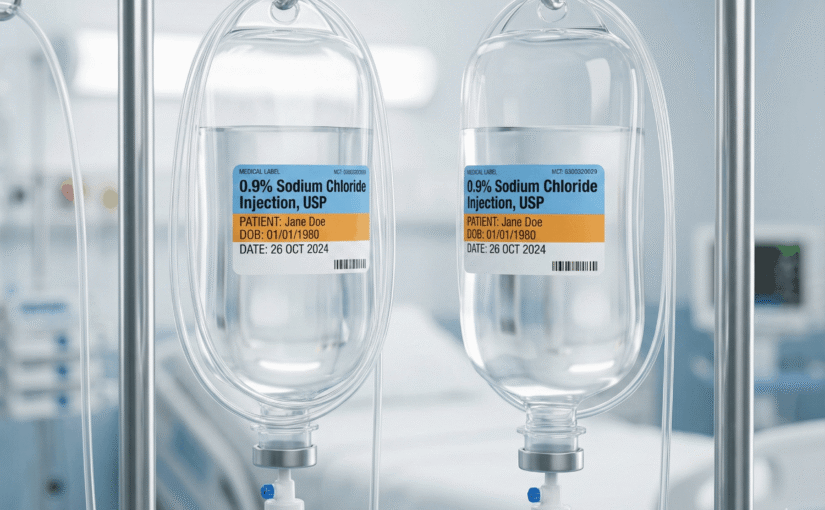
Cognitive overload defines the modern Intensive Care Unit. Clinicians make hundreds of critical decisions every shift while alarms cycle and patient conditions fluctuate rapidly.
Errors occur not because practitioners lack skill but because the human brain struggles to process dense textual information under extreme fatigue. Standardised labelling functions as an essential defense mechanism in this high pressure environment.
Visual cues allow medical teams to identify medication classes instantly because the brain processes colour faster than text. Mermed engineers labelling solutions that align with Australian standards to reduce clinical risk and support the workflow of theatre nurses and anaesthetists.
The high cost of medication errors
Medication safety remains a primary concern for Australian healthcare facilities. The Australian Commission on Safety and Quality in Health Care (ACSQHC) identifies medication errors as the second most common type of clinical incident in hospitals. While many of these incidents cause minor harm, the administration of the wrong injectable medicine in an ICU or operating theatre can be catastrophic.
Complex environments amplify the risk. A tired registrar might mistake a neuromuscular blocker for a sedative if the vials look similar and the syringe labels lack distinct visual differentiation. These “syringes swaps” represent a failure of the system rather than the individual.
Robust labelling protocols interrupt this error chain. When a theatre nurse reaches for a syringe, the specific background colour provides an immediate secondary check before they even read the drug name. This dual verification process is vital for patient safety during rapid sequence inductions or cardiac emergencies.
Navigating compliance and ISO standards
Adherence to established standards ensures that this visual language remains consistent across different facilities. A locum anaesthetist moving between hospitals must rely on the same colour logic to maintain safety.
Australia follows the National Standard for User-applied Labelling of Injectable Medicines, Fluids and Lines. This standard aligns closely with ISO 26825 regarding the colour coding of syringe labels for anaesthesia. The protocol assigns specific Pantone colours to drug classes to prevent misidentification.
Key colour designations
- Blue: Opioids (e.g., Fentanyl, Morphine)
- Red: Muscle Relaxants
- Yellow: Induction Agents
- Orange: Benzodiazepines
- Violet: Vasopressors
Mermed manufactures labels that adhere strictly to these colour standards. We ensure the Pantone matching is precise because a faded or incorrect shade can cause confusion during a crisis. Our production team understands that compliance is binary. A label either meets the standard or it creates liability.
Engineering for clinical workflow
Procurement managers often view labels as a commodity, yet the engineering behind the adhesive and material impacts clinical efficiency. A label that falls off a refrigerated IV bag creates an immediate unidentified substance risk. A label that leaves residue on a reusable tray compromises sterility protocols in the CSSD.
We design our labels to withstand the specific rigours of the Australian healthcare environment. The adhesive must grip distinct surfaces, from plastic syringe barrels to giving sets, without flagging or peeling. This reliability reduces the cognitive load on staff who should focus on the patient rather than checking if a label is secure.
Workflow integration also matters deeply. Theatre Nurse Managers require dispensing systems that allow for single handed operation. We provide dispenser boxes and rolls that fit standard theatre carts because setup time affects case turnover. Although these details seem minor, they cumulatively save hours of nursing time over a financial year.
The risk of offshore supply chains
Recent global disruptions highlighted the fragility of relying on offshore manufacturers for critical medical consumables. A stockout of compliant anaesthetic labels forces hospitals to use generic alternatives or handwritten tape. This reversion destroys the safety net that the standardisation provides.
Facilities that partner with local manufacturers mitigate this supply chain risk. Mermed operates as an Australian engineering and manufacturing firm. We maintain local stock levels and possess the capability to ramp up production rapidly if demand spikes. Procurement teams gain certainty that their compliance requirements will be met regardless of international shipping delays.
Beyond the operating theatre
While anaesthesia drives the demand for colour coded labels, the logic applies across the entire hospital ecosystem. Emergency Departments utilise specific labelling for lines and catheters to prevent route errors. An intrathecal medication administered intravenously can be fatal. Distinct labelling for different routes of administration acts as a physical barrier to these events.
The National Standard mandates clear identification of all lines and catheters. We produce peel off labels that integrate with existing admission paperwork and bedside workflows. This integration ensures that documentation tracks the physical application of the label. It closes the loop between the clinical action and the medical record.
Partnership for audit readiness
Hospital administrators face constant pressure to demonstrate compliance during accreditation cycles. Auditors examine how a facility manages injectable medicines and prevents adverse drug events. Inconsistent labelling is a frequent non compliance finding.
We act as a partner in this process rather than just a vendor. Our team works with CSSD managers and pharmacy departments to audit their current labelling stock against the latest version of the National Standard. We identify gaps where outdated labels might still be in circulation. This proactive approach ensures that when an auditor inspects the anaesthetic trolley or the ICU medication room, they find a fully compliant system.
Safety where it matters most
Patient safety relies on layers of defence. Colour coded labelling serves as a critical visual barrier against medication errors in high stress environments. By adhering to ISO 26825 and the National Standard, hospitals protect both their patients and their practitioners.
Mermed remains committed to engineering high precision, compliant labelling solutions locally. We ensure that Australian healthcare providers have the reliable tools they need to maintain safety and efficiency where it matters most.